Table Explorer
The Table Explorer lets developers group tables by business domains so users can quickly discover and edit related data in a single UI instead of switching between multiple tabs, pages or Workbooks.
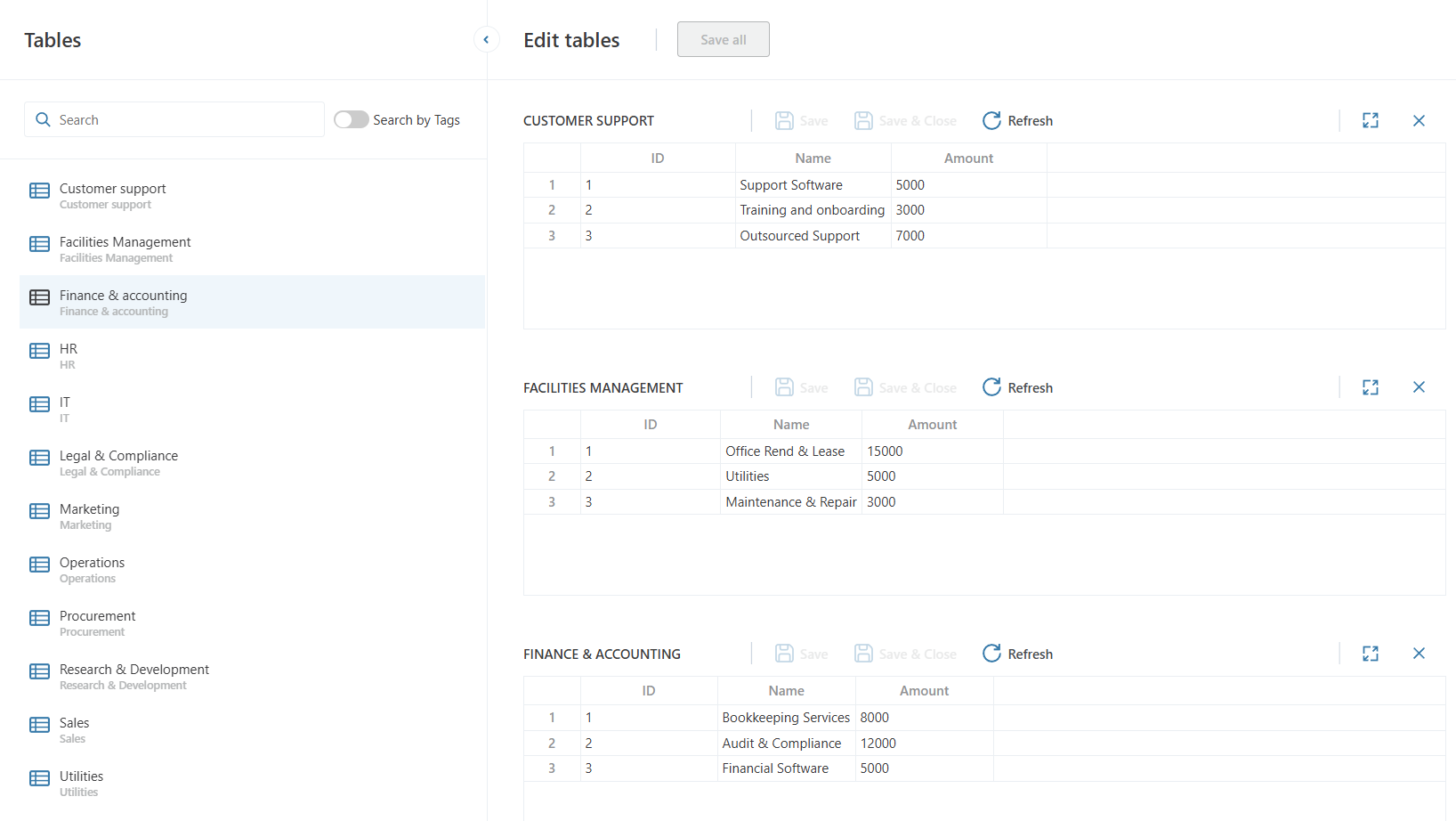
Getting started
To display a Table in a Table Explorer
- Open a Table for edit in the InVision Designer.
- Switch to the Listing tab.
- Check Display in Table Explorer(s)
- Add a Table Explorer component to a Workbook (in the same Solution)
Properties
| Name | Description |
|---|---|
| Context filter | Use this property to specify which Tables to display in the Table Explorer. Only Tables with at least one matching Context string is displayed. Use semicolons (;) to define multiple filter values. For example, Forecast; HR will display tables having a Context strings with Forecast OR HR tokens. You can also set the context filter in the Load Data action by calling the SetContextFilter(...) function. If no context filter is specified, all Tables marked as "Display in Table Explorer(s)" in the solution will be displayed. Read more about context filtering here: Context and context filtering |
| Default grouping | Specifies whether the tables are listed or grouped by tags when the Table Explorer opens. - Automatic (default): groups by tags when there are more than 2 tags and more than 10 tables. - None: lists the tables. - By tags: groups the tables by tags. If none of the tables have tags, they are listed instead. Users can still switch between the two views with the Group by Tags toggle. This property is only available in the web-based InVision Designer. |
Display in Workbook
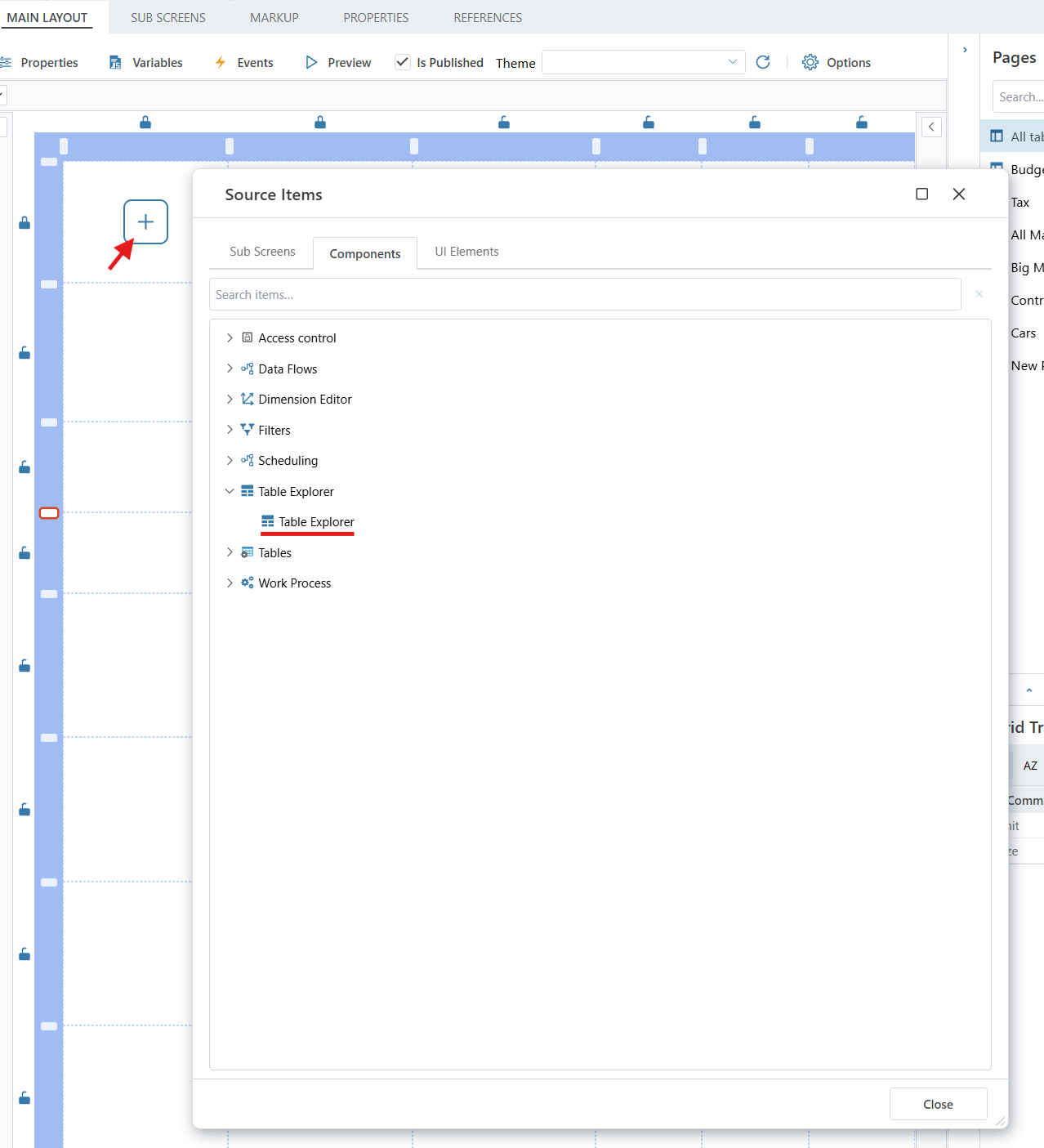
To display a Table Explorer in a Workbook, select it from the toolbox. By default, it will fill the entire page, but you can change this from the Properties panel if you want to.
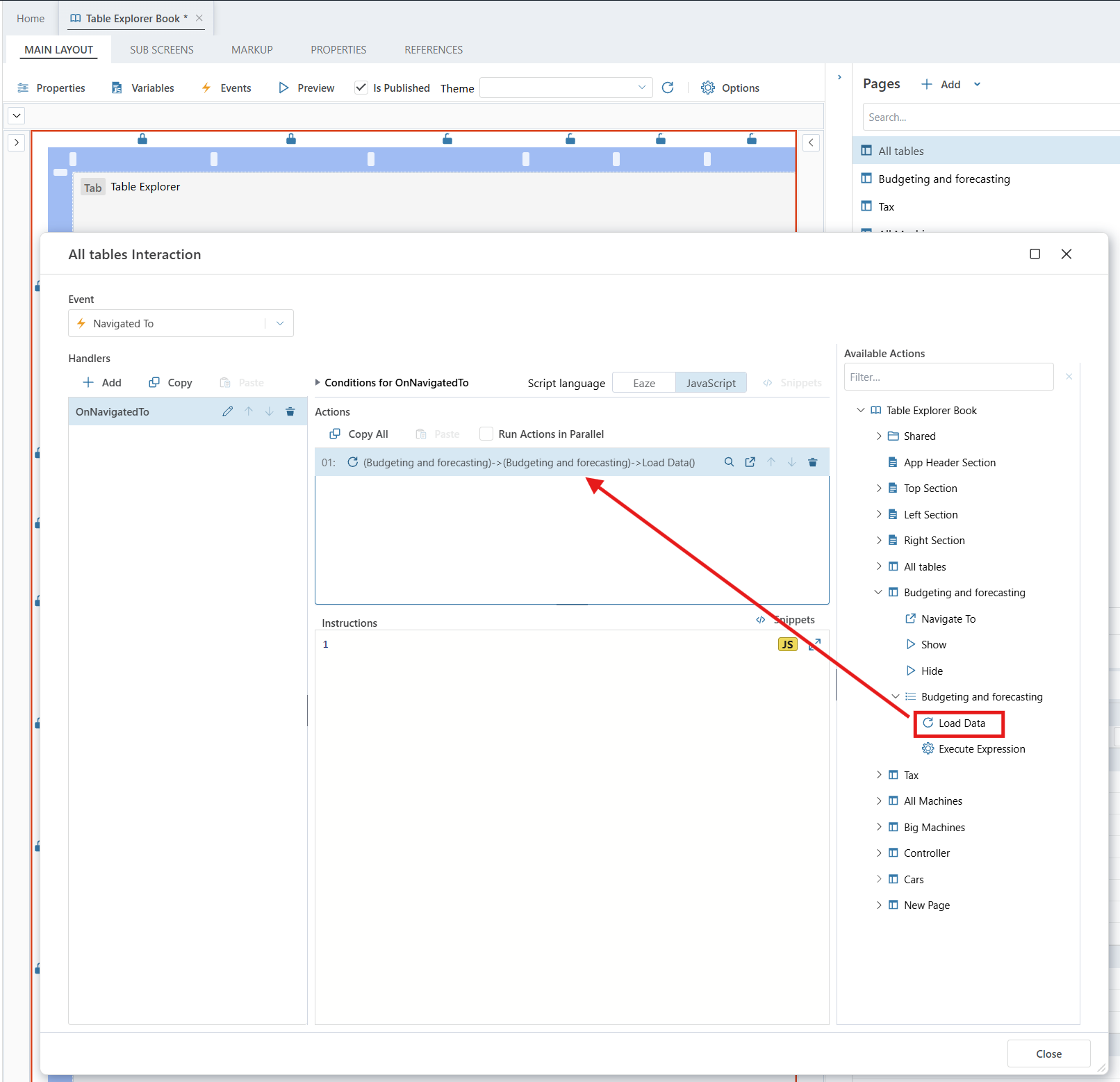
Run the Load Data-action of the Table Explorer to initialize the UI.
Events
| Name | Description | Event args |
|---|---|---|
| Data modified | Raised when one of the listed tables are edited by a user. | Data modified event args |
Data modified event args
{
   "tableName": string,
   "objectId": string,
   "tags": string,
   "flags": string
}
Example Example event handler for the Table Explorer Data modified event
if(Event.Data.flags?.split(';')?.contains('inventory')){
    this.app.variables._state.isInventoryEdited = true;
}